Wheelchair Ramp Rentals: When to Rent vs. Buy
A wheelchair ramp can cost $200 or $20,000 depending on what you actually need. Here's the math behind renting vs. buying — and the questions most installers won't ask.
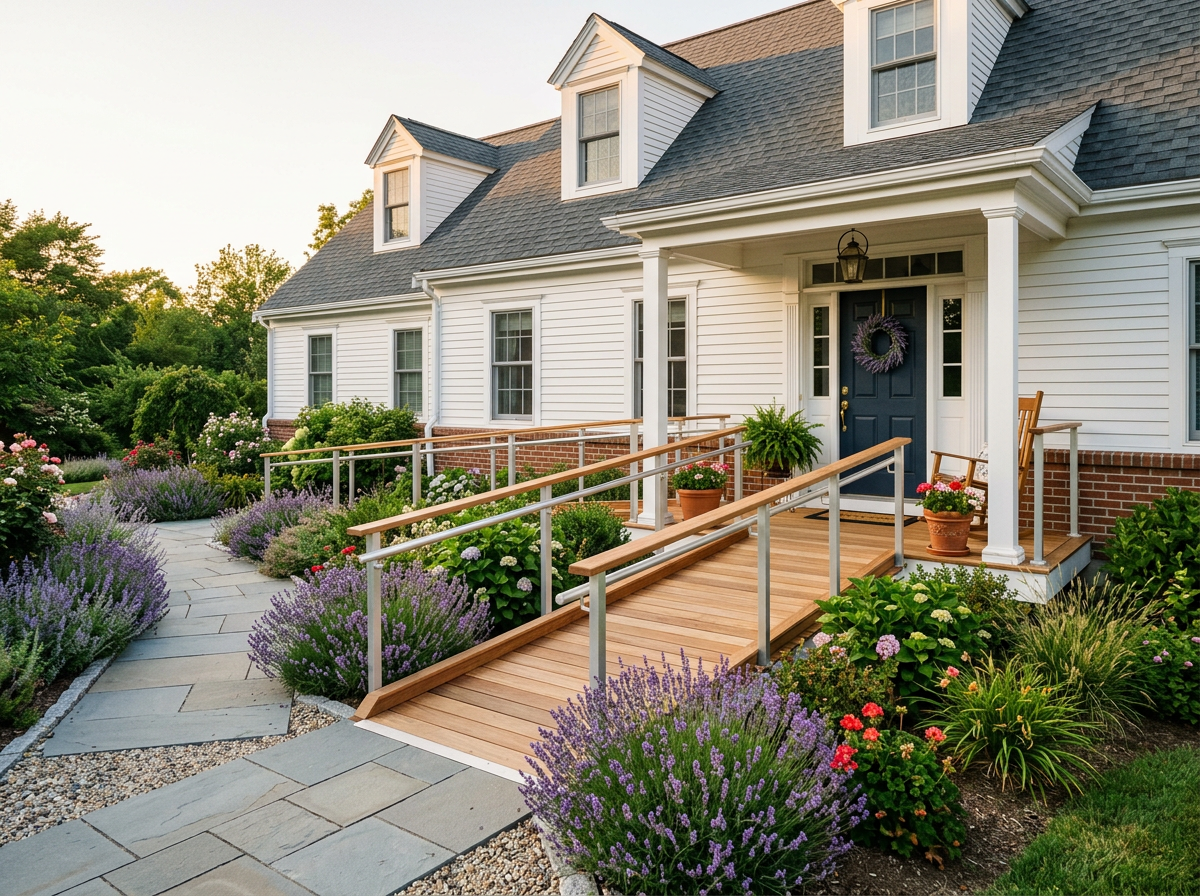
The first question to ask isn't "how much does a ramp cost?" It's "how long do we need it?" That single answer determines whether you should buy a $4,500 modular ramp or rent one for $200/month.
The four types of ramps
Threshold ramps ($75–$400)
Small rubber or aluminum wedges that bridge a single doorway threshold. If your only barrier is a 1–2 inch lip at the front door, this is your answer. No installation, no permits, can be moved between doors.
Portable folding ramps ($150–$1,200)
Aluminum ramps that fold like a suitcase. Good for occasional use — a wedding, a doctor visit, a weekend with grandkids. Rated 600–800 lbs. Don't try to live with one full-time; the surface gets slippery in rain.
Modular aluminum ramps ($1,500–$8,000 installed)
The workhorse. Pre-fabricated sections that bolt together over an existing porch or staircase. No concrete, no permits in most municipalities, removable. This is what we recommend for 80% of families.
Permanent wood or concrete ramps ($3,500–$20,000)
Custom-built, permitted construction. Choose this only if you're certain you need a permanent solution and the modular options don't fit your home aesthetically.
The rent-vs-buy math
Rentals run roughly $150–$300/month for a modular ramp. The same ramp purchased and installed costs $1,500–$5,000.
The break-even is roughly 12–18 months. If you need a ramp for less than a year (post-surgery recovery, hospice care, a temporary disability), rent. If you need it longer than 18 months, buy.
Top rental and purchase options
Amramp — Modular Rental
Nationwide rental network. Same-week installation in most markets. Pay-as-you-go with no long-term contract.
View at retailer →EZ-Access Pathway 3G
The 3G modular system can be assembled in 2–4 hours by a competent DIYer. Reusable, removable, sells well secondhand.
View at retailer →Roll-A-Ramp Threshold
Solid aluminum, non-slip surface, fits doorways from 28"–36". Ships next day.
View at retailer →Code and slope requirements
The ADA standard is a 1:12 slope — one inch of rise for every 12 inches of run. A 24-inch porch needs a 24-foot ramp. Steeper than 1:12 is unsafe for most wheelchair users; less steep (1:16 or 1:20) is preferable for manual wheelchair users.
Most residential installs do not require a permit. Permanent ramps over a certain length (varies by municipality) often do. Always ask your installer to confirm in writing.
📞 Call 1-800-555-AGED